Limewash
Limewash Finish for Commercial & Residential Spaces
A growing trend in high-end apartments and hotel lobbies is the use of a limewash finish. Limewash creates a natural, rustic appearance with subtle movement and a soft, three-dimensional texture that adds depth to walls and architectural features.
Limewash has been used in construction for thousands of years. Civilizations such as the ancient Greeks and Egyptians applied lime-based coatings to protect and finish their buildings. This was partly due to the abundance of limestone in the Mediterranean region, but also because of limewash’s functional benefits. Its porous composition allows moisture to escape, while its naturally high pH helps resist mold and mildew—an important advantage before modern ventilation systems existed.
This long history contributes to the timeless, organic aesthetic limewash is known for today. While its use declined in the mid-20th century with the rise of modern paints and building systems, limewash has seen a strong resurgence in the past decade—driven by demand for natural materials and textured finishes in both residential and commercial design.
How Limewash Is Applied
Applying limewash is very different from traditional paint. The material is thicker—often similar in consistency to wet cement—and requires specialized application techniques to achieve its signature look.
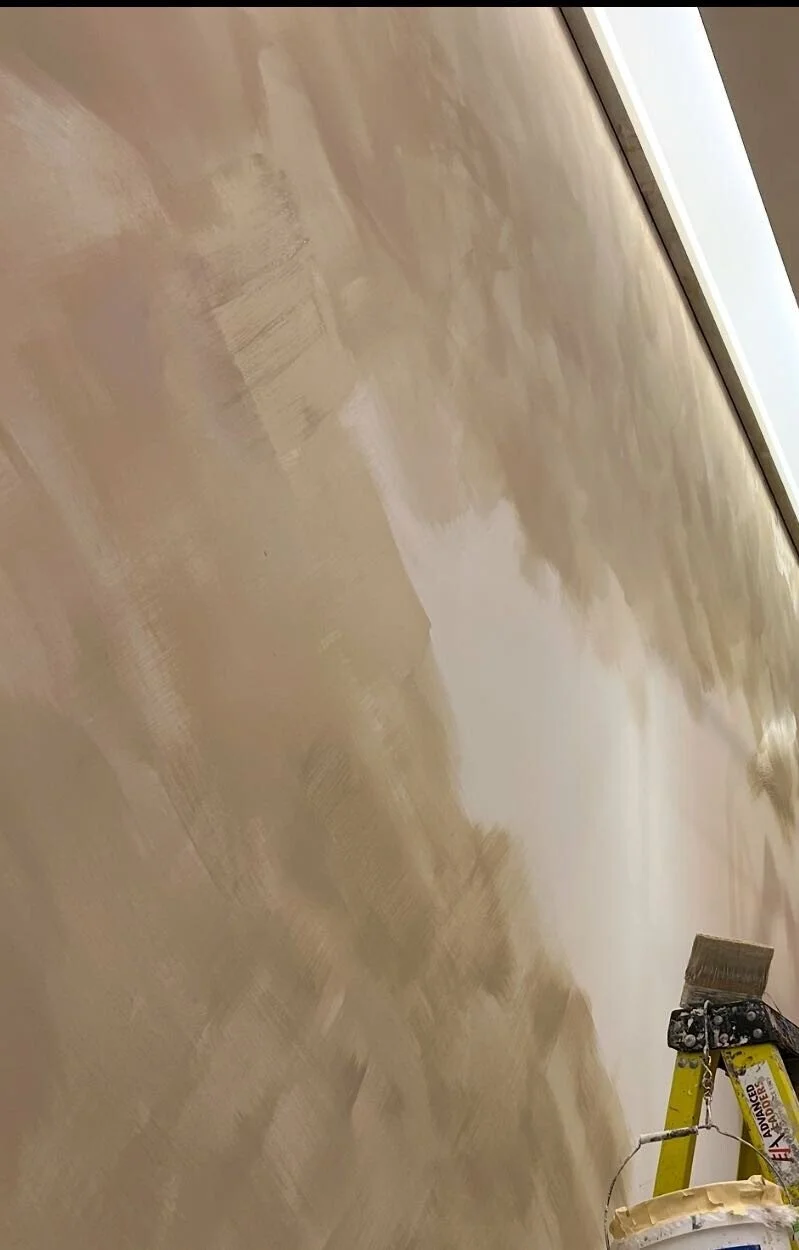
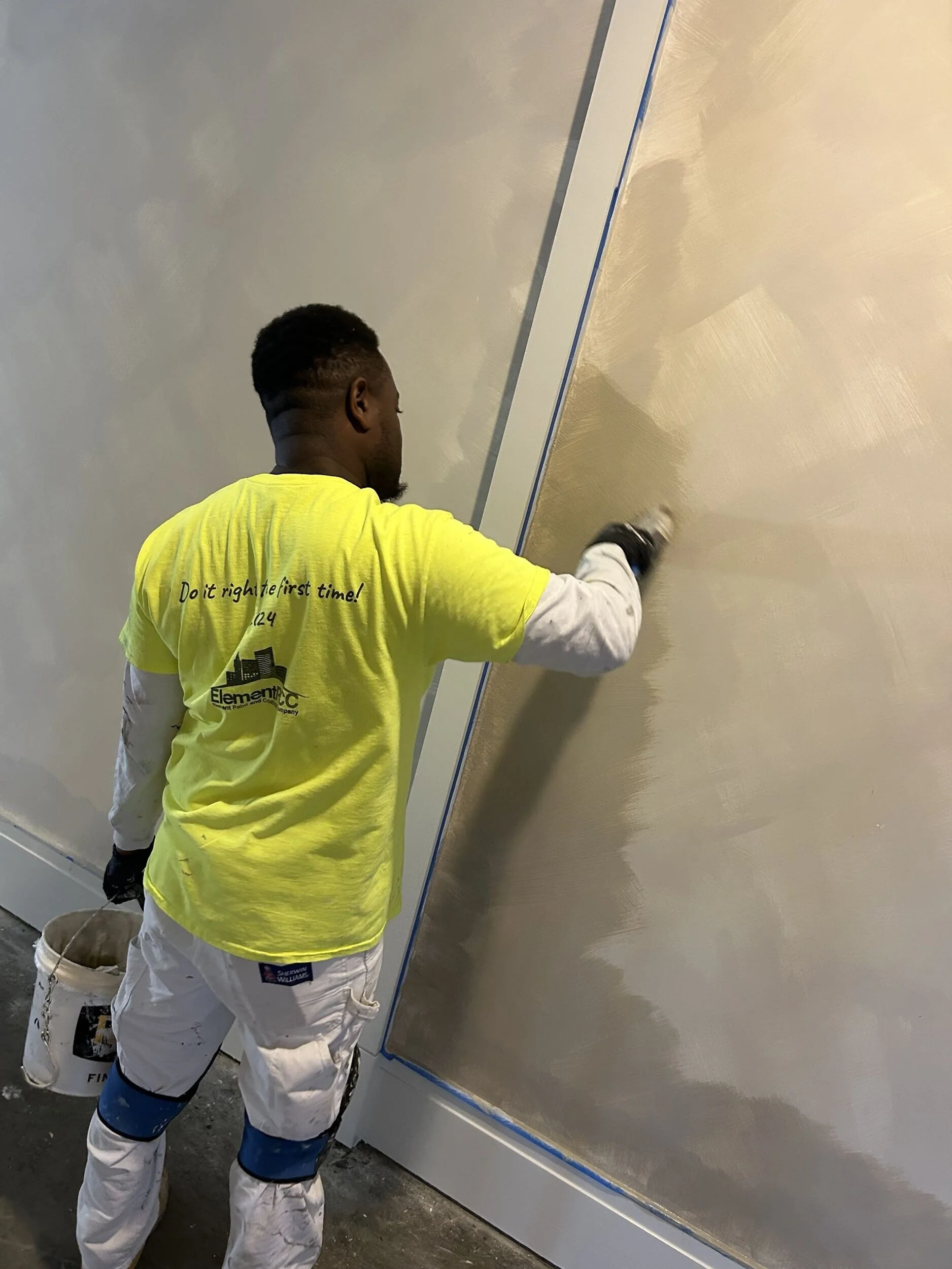
Instead of standard rolling methods, limewash is typically applied using a large masonry or box brush. The product is worked onto the surface in overlapping “X” patterns, applied in sections while maintaining a wet edge. This technique creates the variation and depth that make limewash unique.
Depending on the product and surface, application may require:
A specialty primer
Two or more coats of limewash
Adjusting consistency with water for proper opacity
For example, limewash products such as those from Meoded require a specific system of primer and multiple coats to achieve a consistent and durable finish.
Where Limewash Works Best
Limewash is ideal for:
Brick and masonry surfaces
Stucco and plaster
Interior accent walls
Commercial spaces seeking a natural, high-end aesthetic
Case Study: 1 Hotel Seattle
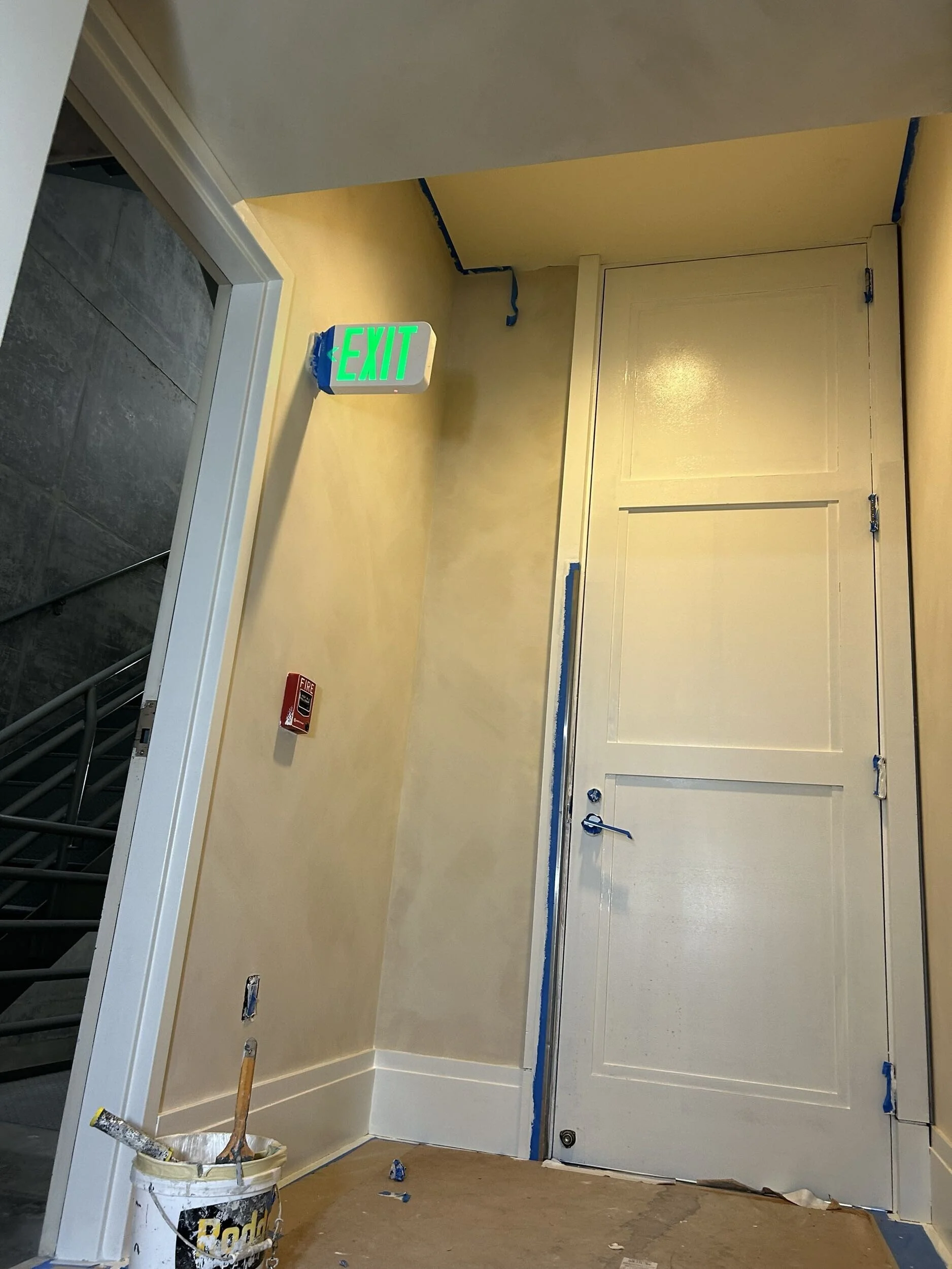
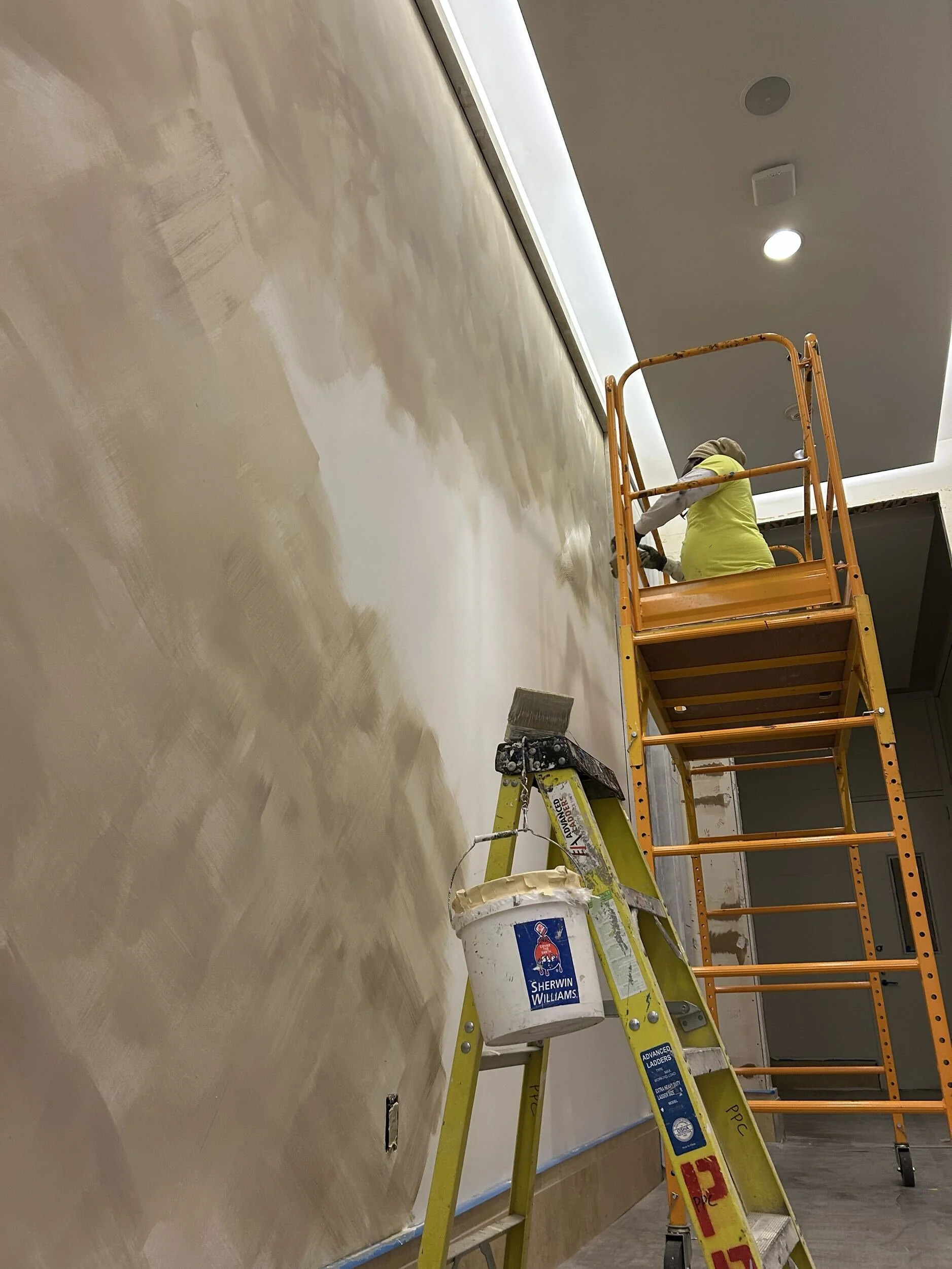
ElementPCC had the opportunity to get comfortable and specialize in applying this product at the 1 Hotel Seattle! Here are some images of our team using this Limewash product by Meoded.