
Exterior Intumescent Coatings for Restaurant Canopy – Frolik at Motif, Seattle
Project Overview
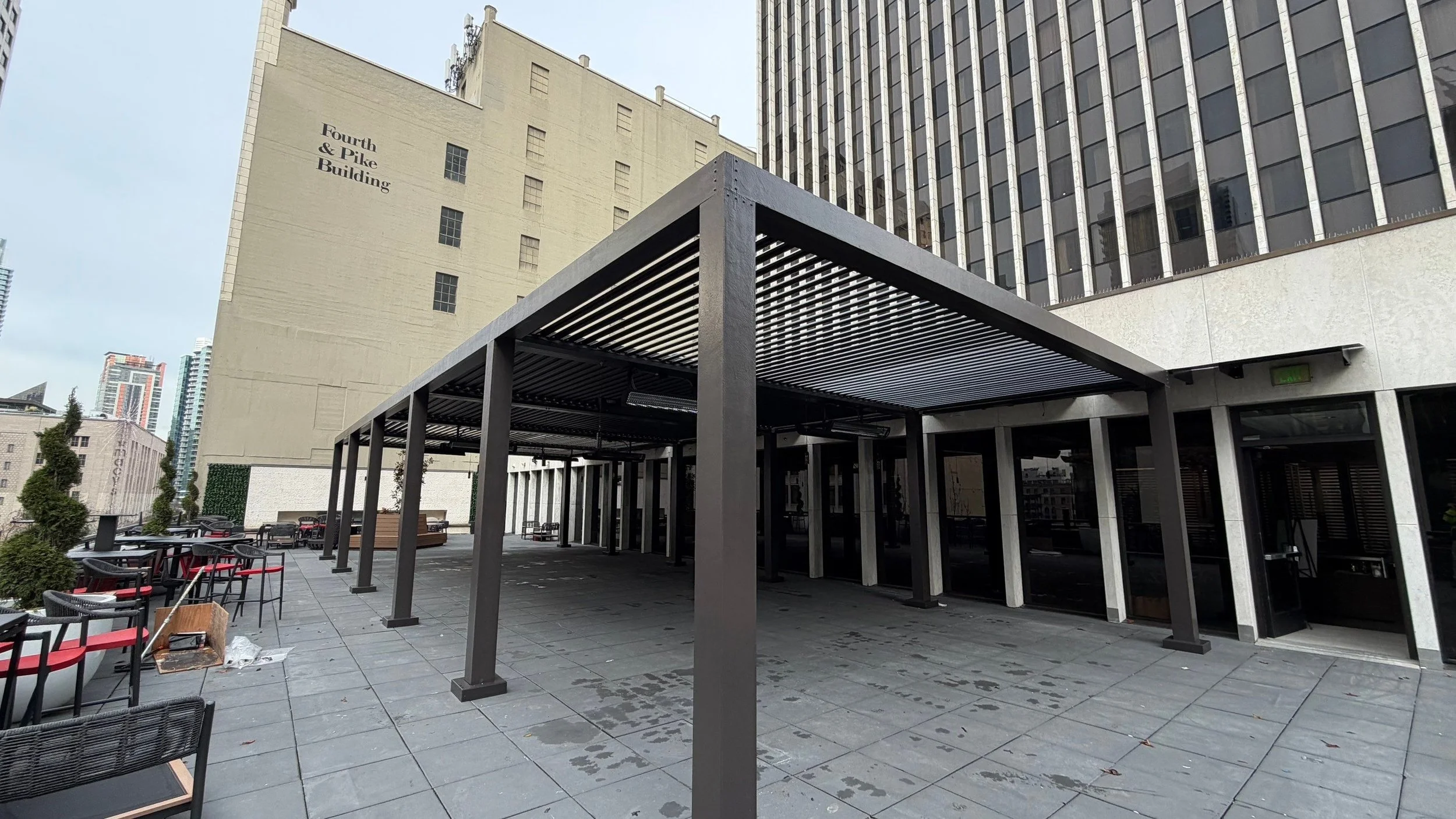
Element PCC completed an exterior intumescent coating retrofit in Seattle, Washington, for an aluminum restaurant canopy at Frolik at Motif. The restaurant canopy required a one-hour fire-resistance rating, and Element PCC installed a complete intumescent coating system while the interior restaurant remained operational.
The work included substrate preparation, application of a tie coat, installation of the specified intumescent material, third-party thickness inspections, application of a weather-resistant topcoat, and oversight of subsequent penetrations made by other contractors. Because the coating system was installed outdoors during winter conditions, the project also required a fully enclosed and mechanically controlled work environment.
Quick Project Facts
Project: Frolik at Motif
Location: Seattle, Washington
Facility Type: Restaurant with exterior covered seating area
Primary Service: Exterior intumescent coating retrofit
Substrate: Existing aluminum canopy structure
Required Rating: One-hour fire-resistance rating
Project Duration: Approximately four weeks of preparation and coating application, followed by approximately two weeks of penetration oversight
Project Period: Winter 2025
Occupancy: Restaurant interior remained open; exterior patio work area was closed
Inspection: Third-party coating-thickness inspections
Environmental Conditions: Approximately 30–50°F, rain, and high humidity
Scope of Work
Element PCC’s scope was to retrofit the existing aluminum canopy with an intumescent coating system capable of meeting the required one-hour fire-resistance rating. The existing structure did not have the required rating, and completion of the fire-protection work was necessary before the restaurant could fully open the affected area.
The coating scope included:
Removal of existing sealant that would interfere with coating adhesion
Preparation of the aluminum substrate
Application of Sherwin-Williams Macropoxy 646 as a tie coat
Third-party verification of tie-coat thickness
Application of Contego High Solids RFB intumescent coating
Third-party verification of the intumescent dry-film thickness required for the one-hour rating
Curing of the intumescent material to the specified minimum hardness
Application of Sherwin-Williams Hi-Solids Polyurethane 250 as the protective topcoat
Oversight of penetrations made during subsequent shade-system installation
Verification that each penetration was sealed against moisture exposure
The coating system was applied to an exterior aluminum structure over a restaurant seating area. This required Element PCC to address both fire-resistance requirements and the long-term protection of an intumescent material exposed to exterior environmental conditions.
Constraints and Execution
The primary execution challenge was maintaining suitable environmental conditions during winter in Seattle. Ambient temperatures ranged from approximately 30°F to 50°F, with repeated rain and high humidity throughout the project.
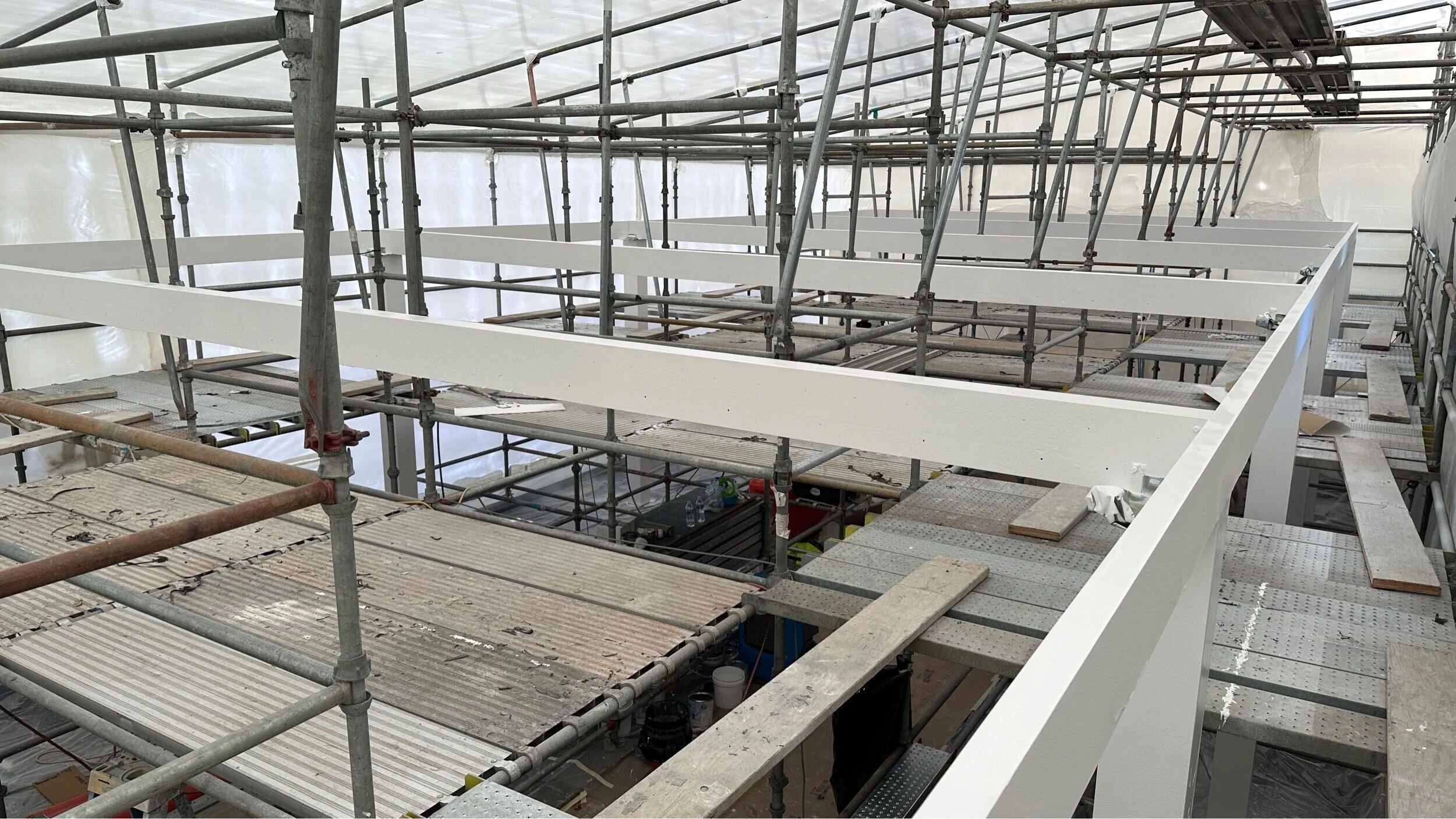
A scaffolding contractor erected scaffolding around and over the canopy. The scaffold was then wrapped in vinyl sheeting to form a temporary enclosure around the entire structure. This enclosure isolated the work area from direct rain, moisture, and ultraviolet exposure while allowing Element PCC to regulate temperature, humidity, and airflow during application and curing.
Dehumidifiers operated continuously inside the enclosure. Negative-air machines were also used to maintain airflow and support environmental control throughout the coating process. The enclosure and mechanical equipment remained important during both application and curing because exposure to moisture or unsuitable environmental conditions could compromise the coating system.
Direct moisture contact could soften or blister exposed intumescent material. Moisture entering behind the completed topcoat could also weaken the coating and contribute to partial or complete system failure. Direct ultraviolet exposure before the protective topcoat was installed also presented a risk of cracking or deterioration. Element PCC therefore maintained the enclosure until the intumescent coating had cured sufficiently and the exterior topcoat could be applied.
The interior restaurant remained open during the work. The exterior patio beneath the canopy was closed, allowing coating operations to take place during normal daytime hours without closing the restaurant interior.
Materials and Coating Systems
The installed system included three principal coating stages:
Tie coat: Sherwin-Williams Macropoxy 646
Intumescent coating: Contego High Solids RFB
Protective topcoat: Sherwin-Williams Hi-Solids Polyurethane 250
Macropoxy 646 was applied as the tie coat between the prepared aluminum and the intumescent coating. After application, a third-party inspector measured the coating to verify that it met the manufacturer-required thickness.
Contego High Solids RFB was then applied at the thickness required to provide the specified one-hour fire-resistance rating. The applied intumescent coating was measured by a third-party inspector to confirm that the required dry-film thickness had been achieved. Contego describes its High Solids RFB as an intumescent coating system for structural fire protection, with required thickness determined by the applicable fire-resistance design.
After inspection, the intumescent coating was allowed to cure until it reached the minimum hardness threshold of 70 Shore D. Reaching that threshold took approximately four days under the controlled enclosure conditions.
Element PCC then applied Sherwin-Williams Hi-Solids Polyurethane 250 over the intumescent material. The topcoat provided a continuous exterior seal intended to protect the completed system from weather and environmental exposure. Sherwin-Williams identifies Hi-Solids Polyurethane 250 as a two-component polyurethane finish with resistance to corrosion and weathering.
Phasing, Coordination, and Changes
The project included approximately four weeks of surface preparation, coating installation, curing, and inspection. Element PCC then remained involved for approximately two additional weeks while another contractor installed tracks, gutters, and components for the shade system above the canopy.
Installation of these components required bolts and fasteners to penetrate the completed intumescent system. Each penetration created a potential pathway for moisture to reach the unprotected interior of the coating system.
Element PCC oversaw this portion of the work to ensure that every penetration was sealed with moisture-resistant caulking as it was installed. The objective was to prevent any exposed intumescent material from remaining around bolts, tracks, gutters, or other attachment points.
This oversight extended Element PCC’s responsibilities beyond initial coating application. It required direct coordination with the contractor installing the shade components and continued observation of work that could affect the integrity of the completed fire-protection system.
Inspection and Compliance
Third-party inspections were completed at two critical stages.
The first inspection measured the Macropoxy 646 tie coat to confirm that it met the manufacturer-recommended thickness before installation of the intumescent material.
The second inspection measured the Contego High Solids RFB coating to verify that the applied thickness met the specification associated with the required one-hour fire-resistance rating.
The completed coating system passed inspection. The project was performed to satisfy the fire-rating requirement applicable to the exterior canopy under the Seattle project requirements.
Element PCC also worked closely with Contego during the project because the exterior use of the intumescent coating required additional attention to environmental exposure, curing, topcoat protection, and subsequent penetrations.
Element PCC is the only Contego-backed applicator in the United States for exterior applications of this coating system.
Results
Element PCC completed the exterior intumescent coating retrofit and achieved the required one-hour fire-resistance rating for the aluminum canopy.
The coating system passed the required third-party thickness inspections. The intumescent material reached the specified minimum hardness before the exterior polyurethane topcoat was installed, and penetrations associated with the later shade-system work were monitored and sealed against moisture exposure.
The project was completed while the restaurant interior remained open. The temporary scaffold enclosure, continuous dehumidification, controlled airflow, and coordination with subsequent contractors allowed the work to proceed through cold, wet, and humid winter conditions.
Completion of the system allowed the restaurant project to satisfy the canopy fire-protection requirement and proceed with opening the affected exterior area.
Conclusion
The Frolik at Motif project demonstrates Element PCC’s work as an exterior intumescent coating contractor in Seattle, particularly where fire-protection requirements must be met under difficult environmental and operational conditions.
The work combined aluminum substrate preparation, a multi-coat fire-protection system, third-party dry-film-thickness verification, controlled curing, exterior weather protection, and oversight of later penetrations. Maintaining the integrity of the completed system required coordination not only during application but also during the installation of components attached through the coating after it had been completed.